
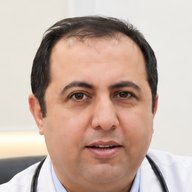
 Dr. Abolfazl NouriOrthopedic surgeon · Shoulder surgery fellowship
The body’s most mobile joint deserves the most precise care.
Diagnosis and treatment of shoulder injuries and conditions, from non-surgical care to arthroscopy and joint replacement, alongside general orthopedics in Zanjan.
- Medical council no.
- 123612
- Fellowship
- Shoulder surgery
- Clinic
- Zanjan
Range of motion
From your side to overhead
In a healthy shoulder the arm lifts about 180 degrees from your side. That same range is what makes the shoulder prone to tendon tears, dislocation and stiffness.
Pain in this range is a common sign of impingement or rotator cuff injury.
Anatomy and treatment
Each part of the shoulder has its own injuries and treatments
Scroll, or tap a part to jump to it.
Four tendons that hold the head of the arm bone in its socket and let you lift and rotate the arm.
TreatmentArthroscopic tear repair, tendinitis and impingement care
A ring of cartilage around the socket that deepens and stabilizes the joint.
TreatmentDislocation and instability care, labral repair (Bankart and SLAP lesions)
Where the head of the humerus meets the glenoid socket; the main joint of the shoulder.
TreatmentArthritis care, shoulder replacement (anatomic and reverse), frozen shoulder treatment
The collarbone and the small joint on top of the shoulder that links it to the shoulder blade.
TreatmentClavicle fracture and AC joint separation treatment
The goal of treatment
Every treatment has one clear goal: getting back to everyday things, without pain. Reaching up, getting dressed, holding the people you love and returning to sport.
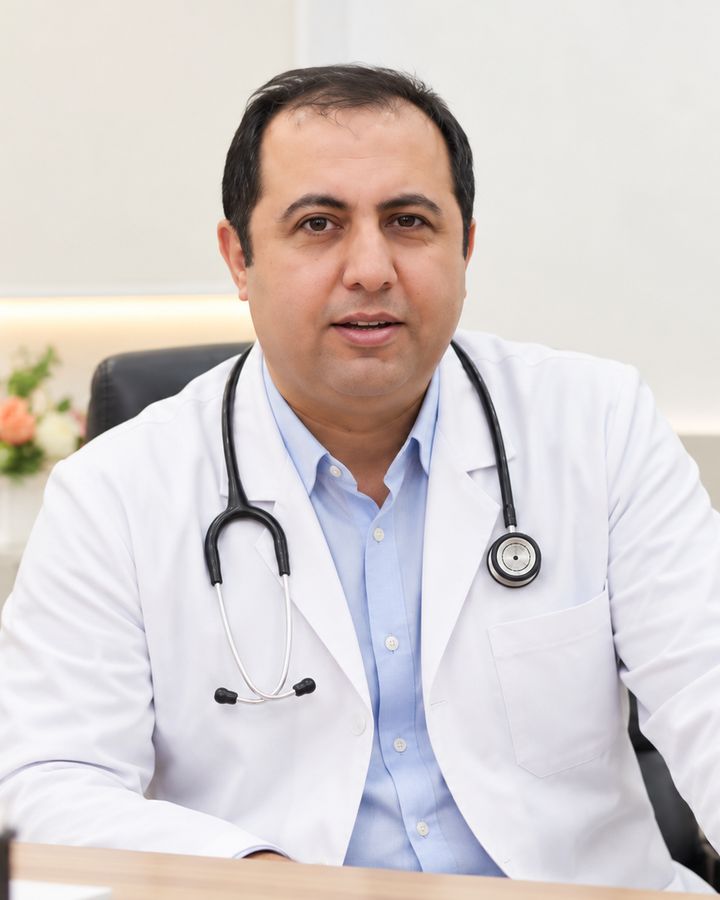
About the doctor
Dr. Abolfazl Nouri
Orthopedic surgeon, shoulder surgery fellowship
Dr. Nouri’s main focus is the diagnosis and treatment of shoulder conditions and injuries, from non-surgical care and rehabilitation to arthroscopic surgery and joint replacement. He also sees general orthopedic patients at his clinic.
- Specialty
- Orthopedic surgery (bones and joints)
- Fellowship
- Shoulder surgery
- Medical council no.
- 123612
- Education
- [University]
Care pathway
From the first visit back to your activities
Each step is set for the individual patient, based on the exam and imaging results.
- Step 1
Consultation and exam
History, range-of-motion measurement and shoulder-specific tests.
- Step 2
Imaging
X-ray, ultrasound or MRI, whichever the diagnosis needs.
- Step 3
Treatment
From medication, injections and physiotherapy to arthroscopy or open surgery, matched to the injury.
- Step 4
Rehabilitation and follow-up
A staged exercise plan and follow-up visits until you return to your activities.
General orthopedics
Beyond the shoulder
Diagnosis and treatment of bone and joint conditions throughout the body.
- Knee
- Meniscus and ACL injuries, knee arthritis
- Elbow and wrist
- Tennis elbow, carpal tunnel syndrome, tendon injuries
- Fractures
- Surgical and non-surgical fracture care
- Sports injuries
- Diagnosis, treatment and return-to-sport planning
- Arthritis and joint pain
- Medication, joint injections and physiotherapy
- Hip
- Hip arthritis and pain
Questions
Common questions about the shoulder
These answers are general. Treatment decisions are made for each patient after an examination.
Does every painful shoulder need surgery?
No. Most shoulder pain is managed without surgery, through activity changes, medication, physiotherapy and, in some cases, injections. Surgery is usually considered when there is a clear structural injury or when non-surgical treatment has not worked.
What is shoulder arthroscopy?
A minimally invasive operation done through a few small incisions with a slim camera. Many problems inside the joint, including rotator cuff tears and labral injuries, can be examined and repaired this way.
How long is recovery after rotator cuff repair?
Usually a few weeks in a sling, followed by staged physiotherapy. Regaining full strength can take several months and depends on the size of the tear, tissue quality and keeping up with the exercises.
My shoulder has dislocated more than once. Can it be treated?
Repeated dislocation usually means the structures that hold the joint in place, such as the labrum, are damaged. After an exam and imaging, treatment can be rehabilitation or a stabilization operation, depending on age, activity and the extent of the injury.
What is a frozen shoulder?
Inflammation and thickening of the joint capsule that causes pain and a gradual loss of movement. Most patients improve with non-surgical care and physiotherapy; for stubborn cases, options such as arthroscopic release are considered.
What should I bring to my first visit?
Any previous X-ray, ultrasound or MRI images and reports, a list of your medications, and any earlier surgery or physiotherapy reports.
Clinic
Appointments and visits
- Address
- [Full clinic address]Directions on Neshan
- Clinic days and hours
- [e.g. Sat to Wed, 4 to 8 pm]
- Clinic phone
- [+98 21 0000 0000]
- Medical council no.
- 123612Verify on the Medical Council website
Online booking
Book a visit online through [booking platform]. For follow-ups after surgery, please call the clinic.
Book onlinePlease bring any previous X-ray and MRI images and reports.